


Return of the Jedi: Unrefined Yet Pure Fantasy
- Luke Johansen
- Aug 12, 2025
- 4 min read

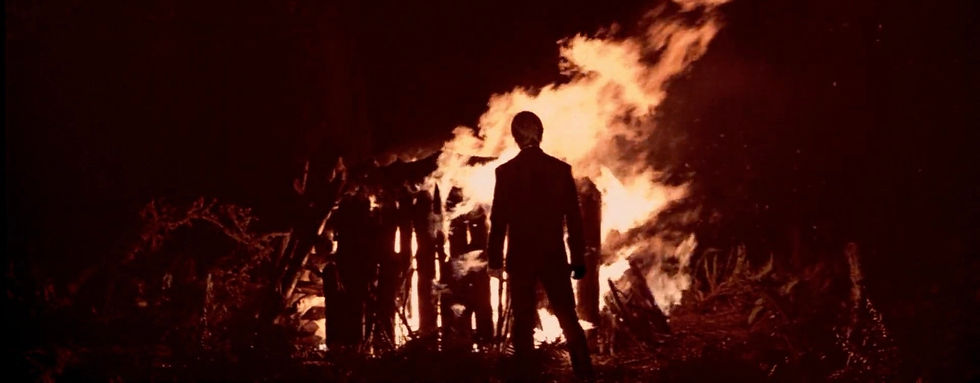
Return of the Jedi, George Lucas's conclusion to his first, world-renowned Star Wars trilogy, has the unenviable task of both telling its own story and concluding the one before it, too. All things considered, it does a pretty good job of tying up all the loose ends in a way that feels satisfyingly final while also upholding the level of imagination we'd come to expect from previous entries. In more ways than not, it's also the most grown-up episode of the Original Trilogy, its exploration of Luke and Vader's father-son relationship methodical and occasionally startling. Nevertheless, it lacks the streamlined tendencies of both A New Hope and The Empire Strikes Back, and is undoubtedly the least efficient of the three films. On one hand, it's the only movie in the trilogy that was handcuffed to predetermined plot points by the previous installment, but on the other, it remains bloated and imprecise to an extent. Still, no one will accuse it of being uninspired. Return of the Jedi is brilliantly visionary and recklessly creative, like a beautiful - if barely unfinished - carved marble statue.
The imagination of this franchise remains on full throttle in Return, this time setting its sights on a sleazier part of Tatooine, Luke Skywalker's desert homeworld of the original film. The notorious gangster Jabba the Hutt - an alien now, but a human in a deleted scene from A New Hope - owns and rules an enormous palace overrun by a motley crew of the worst beings in the galaxy, an untapped-until-1983 part of this cinematic galaxy. Han may have called him a "wonderful human being" in some varying cuts of the first film, but this fat and villainous crime lord is anything but. He is the Star Wars version of a wealthy South American gangster: flamboyant, degenerate, obese, but most of all intelligent. His entourage of alien and human beings is possibly the most suffocatingly distasteful collection of beings in the galaxy, often feeling taboo to even look at. Nevertheless, George Lucas's decision to include two major storylines in this movie - one featuring our heroes' war against Jabba, the other featuring their war against the Empire - creates a crisis of interests. Each of these storylines features its own inciting incident, crisis, and resolution. Return of the Jedi sometimes has trouble choosing its priorities, and while I do understand that Han's rescue from Jabba was entirely necessary, I sometimes wonder if the Original Trilogy of Star Wars would have been better suited as a quadrilogy, four movies instead of just three.
I likewise have mixed feelings about many of this movie's revelations. I will discuss the most major of these in detail, so consider this your spoiler warning. Given that Luke and Leia kiss twice in the previous two films, it's fairly evident that it was not Lucas's plan to have them end up as brother and sister. The revelation that this is indeed the case is an intriguing twist, but also a plea for attention, an appeal to those addicted to the drama of the franchise and hoping for additional tidbits to be mixed into Luke, Han, and Leia's love triangle. It's a shocking reveal, but it doesn't take the overall story arc of Return of the Jedi in any meaningfully new direction. There's still a Death Star to destroy, an Emperor to kill, and a Vader to redeem. This twist doesn't supplement any of those things. Speaking of a second Death Star, I feel conflicted about the idea. On paper, it's a familiar threat that can never escape feeling like we've been there, blown up that. Still, this new Death Star is used refreshingly, surprisingly, and intelligently. The dogfighting between Imperial and Rebel fighter craft inside its half-finished interior is particularly claustrophobic.
Much of this movie is built around both Luke Skywalker and the ways in which he's changed, and I'll admit that I am drawn to this older and wiser Luke. He's no longer the impulsive farm boy he was, and I like this darker, smarter, calmer version of him. He's more complex, less predictable, and more than anything else, mysterious. His relationship with his father, Darth Vader, comes full circle in this concluding chapter. Their relationship is more grown-up than before, and it holds more weight now that you know they are connected more deeply than A New Hope alluded to. They are no longer just enemies with no history in common. Now, they have a commitment not just to the defeat or even the destruction of the other, but to their emotional and philosophical deconstruction as well. Even if Return of the Jedi isn't the most efficient movie in the trilogy, it's arguably the most introspective. The fantasy remains fantastic, yet grounded around real, emotionally raw stakes, no strings attached. But as for heartstrings, that's a different story. Lucas can pull them.
Return of the Jedi is most successful when its narrative limitations allow it to be its own movie and hyper-focus on Darth Vader and Luke Skywalker's shattered father-son relationship, and is least successful when it needs to pay homage to and tie up all the loose ends left hanging by the previous entry. It's imperfect, but ultimately a more-than-satisfying conclusion to possibly the most beloved trilogy of all time. Its exploration of parts of the Star Wars universe that had been untouched until then is a sometimes-sleazy, but almost-always-satisfying and high-tech zoo exhibit that you can count on to be an absolute blast to watch from beginning to end, through the ups and downs. Its cast is just as capable as they were three years prior in The Empire Strikes Back, and in a few ways, they've actually grown and matured. I wish the third part of this epic story were as focused and creative as the first two, but when it does do something right, Return of the Jedi absolutely knocks the ball out of the park. If nothing else, much of this movie manages to feel very important, even if it takes time to find its footing due to the tendency of prioritizing the story the previous film was telling over its own. Like the two excellent movies before it, Return of the Jedi is pure and visionary fantasy at its best, and it will truly transport you to a galaxy far, far away through thick and thin. Its priorities may remain underbaked, but imagination is sometimes a dish best served raw.
Star Wars: Return of the Jedi - 7/10
2 Corinthians 12:14


Comments